
Kitchen Layout Design 101: Creating Functional Beauty in Seattle Homes
Seattle's distinctive architecture and lifestyle demand thoughtful kitchen layout design that balances Pacific Northwest aesthetics with modern functionality. At LEICHT Seattle, we understand that the best kitchens reflect both the way you live and the unique character of the region. From Capitol Hill townhomes to Queen Anne Victorians, from waterfront condos to contemporary homes in the hills, kitchen layout design shapes how you experience your space every single day.
The Pacific Northwest approach to kitchen layout design emphasizes connection to nature, abundant natural light, and spaces that facilitate both quiet mornings with coffee and lively gatherings with friends. Let's explore how different layout configurations respond to these priorities while addressing the practical realities of Seattle living.
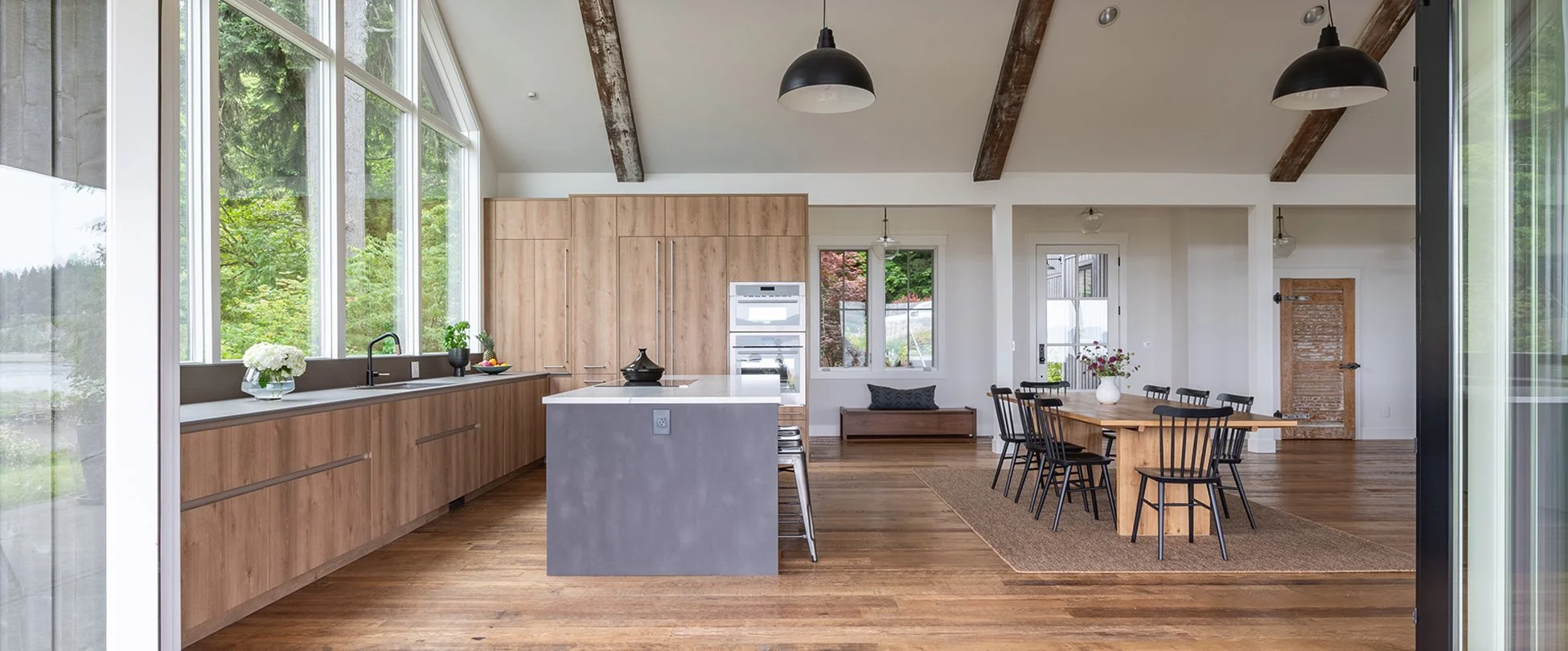
Why Kitchen Layout Design Matters More Than You Think
Your kitchen layout design determines far more than where appliances sit. It influences traffic patterns throughout your home, affects how natural light moves through the space, dictates storage accessibility, and establishes the social dynamics of your household. A well-considered layout makes cooking feel effortless, while a poor one creates daily frustration regardless of how beautiful the finishes might be.
In Seattle, where many homes feature panoramic views of the Sound, the mountains, or the city skyline, kitchen layout design must consider sight lines carefully. You don't want upper cabinets blocking those million-dollar views, nor do you want to position your primary work area with your back to the windows. These considerations require strategic planning from the earliest stages of design.
The region's emphasis on sustainability also influences kitchen layout design. Thoughtful layouts minimize wasted space, reduce the need for excessive cabinetry, and create efficient work triangles that conserve energy during meal preparation. This aligns perfectly with the values of environmentally conscious Seattle homeowners.
The Work Triangle: Still Relevant in Modern Kitchen Layout Design
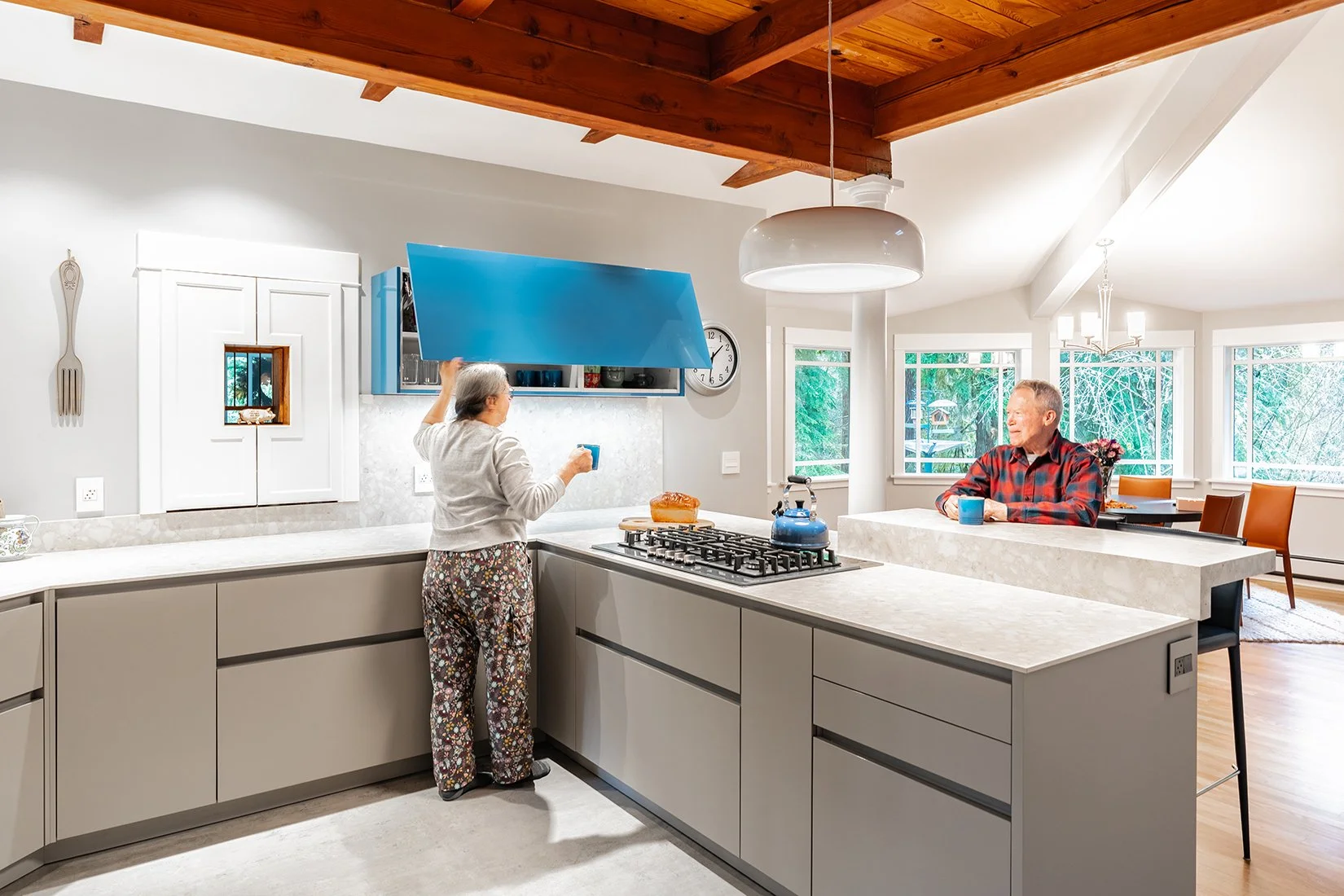
Before diving into specific configurations, let's address the classic principle of kitchen layout design: the work triangle. This concept positions your three primary work stations, refrigerator, sink, and cooktop, in a triangular relationship that minimizes walking distance and maximizes efficiency.
While contemporary kitchens have evolved beyond rigid adherence to this principle, it remains a useful framework. In modern European kitchen designers Seattle homeowners love, the work triangle often expands into work zones that accommodate multiple cooks and integrate additional appliances like coffee stations, steam ovens, and prep sinks.
At our kitchen showroom Seattle location, we help clients understand how classic principles like the work triangle can be adapted to contemporary lifestyles and open-concept living. The goal isn't following rules but creating intuitive flow.
Single-Wall Simplicity: Maximizing Small Footprints

The single-wall kitchen layout design arranges all cabinetry, appliances, and work surfaces along one continuous wall. While less common than other configurations, this layout offers compelling advantages in specific situations.
Ideal Applications:
Single-wall layouts work beautifully in studio apartments, urban lofts, and small homes where square footage is precious. They're also excellent for secondary kitchens in basement apartments or accessory dwelling units, increasingly common in Seattle as homeowners add rental units to their properties.
This kitchen layout design excels when you want to maintain an open feel while still providing full kitchen functionality. By concentrating everything along one wall, you leave the remaining floor area completely open for dining, living, or circulation.
Making It Work:
Success with single-wall layouts requires meticulous planning. Every inch of the wall must be utilized efficiently, with careful consideration of appliance placement. Typically, you'll position the sink in the center, flanked by the cooktop and refrigerator on either side. This creates a linear workflow that, while requiring more steps than compact triangular layouts, remains logical and functional.
Consider incorporating a small island or mobile cart to add prep space and storage without overwhelming the room. Vertical storage becomes crucial, think floor-to-ceiling cabinetry and integrated pantry solutions that maximize the wall's height.
In Seattle's historic neighborhoods where homes often feature smaller original kitchens, single-wall layouts can be surprisingly effective, especially when the goal is preserving the home's character while modernizing functionality.
Peninsula Configurations: Bridge Between Open and Closed
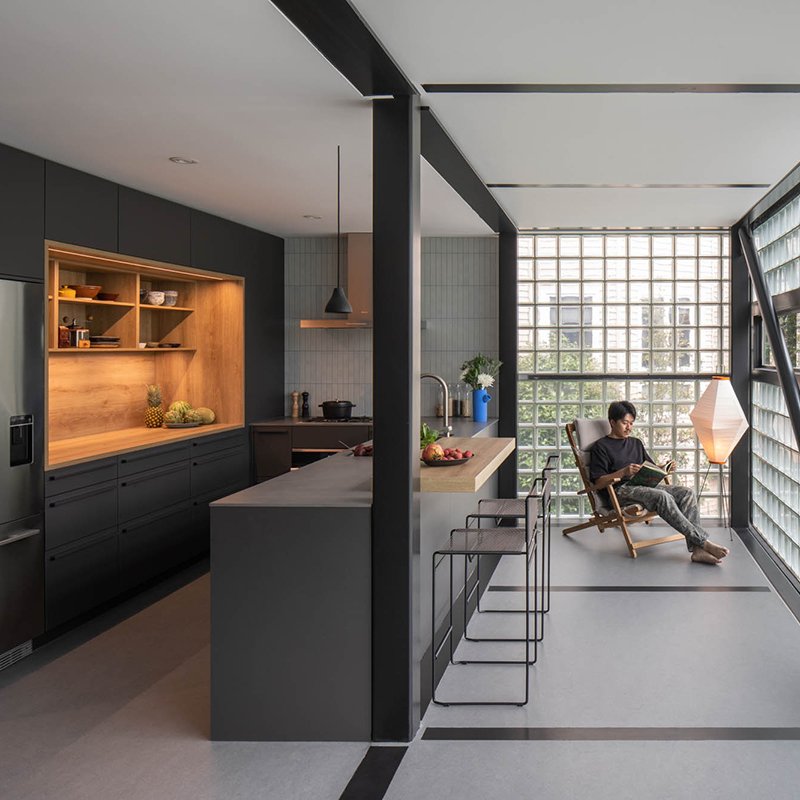
A peninsula kitchen layout design extends cabinetry from a wall into the room, creating an L-shape with one end attached rather than freestanding. This configuration offers many benefits of islands while requiring less floor space and avoiding some logistical complications.
Ideal Applications:
Peninsulas work wonderfully in kitchens that open to living or dining areas but aren't quite large enough for a full island. They create a natural boundary between spaces without walls, maintaining visual connection while defining separate zones, perfect for Seattle's popular open-concept layouts.
This kitchen layout design also suits galley kitchens where one end opens to another room. The peninsula provides a logical terminus while adding valuable counter space and storage. It's an excellent solution for condos and townhomes where maximizing every square foot matters.
Making It Work:
The peninsula typically houses seating on the living area side, creating a casual dining spot or homework station. Plan for adequate overhang, 12 to 15 inches provides comfortable knee space. The kitchen side might incorporate appliances, storage, or primary prep areas.
Consider traffic flow carefully. The peninsula should guide movement naturally rather than creating bottlenecks. Ensure at least 42 inches of clearance around all sides where people will walk or work.
Peninsulas offer excellent opportunities for two-tone designs. The peninsula might feature a contrasting color or material from the perimeter cabinetry, creating visual interest and helping define the separate zones on either side.
Horseshoe Efficiency: The U-Shaped Approach

The U-shaped kitchen layout design surrounds you with workspace on three sides, creating what many consider the most efficient configuration for serious cooking. This layout maximizes counter space and storage while containing activity within a defined area.
Ideal Applications:
U-shaped layouts thrive in dedicated kitchen rooms with adequate square footage, typically at least 10 by 10 feet. They're ideal for homeowners who love to cook, need extensive storage, or want to keep kitchen activity visually separated from living areas in open-concept homes.
This kitchen layout design works particularly well in Seattle's craftsman and Tudor-style homes, where rooms tend to be more defined and compartmentalized. The three walls provide ample opportunity to incorporate the extensive storage that growing families require.
Making It Work:
The key to successful U-shaped kitchen layout design is maintaining proper clearance between opposing walls, ideally five to six feet. Less than this feels cramped; more creates excessive walking between work zones.
Position your primary sink and prep area on one wall, with the cooktop and refrigerator on the perpendicular walls to create an efficient work triangle. This arrangement allows multiple cooks to work simultaneously without constantly crossing paths.
Corner solutions deserve special attention in U-shaped layouts. Rather than treating corners as afterthoughts, invest in quality corner cabinet systems that provide genuine accessibility. LEICHT's innovative corner solutions transform potentially wasted space into highly functional storage.
For homes with beautiful views, consider eliminating upper cabinets on the window wall of the U-shape, or using the U-configuration on interior walls while keeping the view wall open for windows and perhaps just lower cabinetry.
L-Shaped Versatility: Seattle's Most Popular Choice
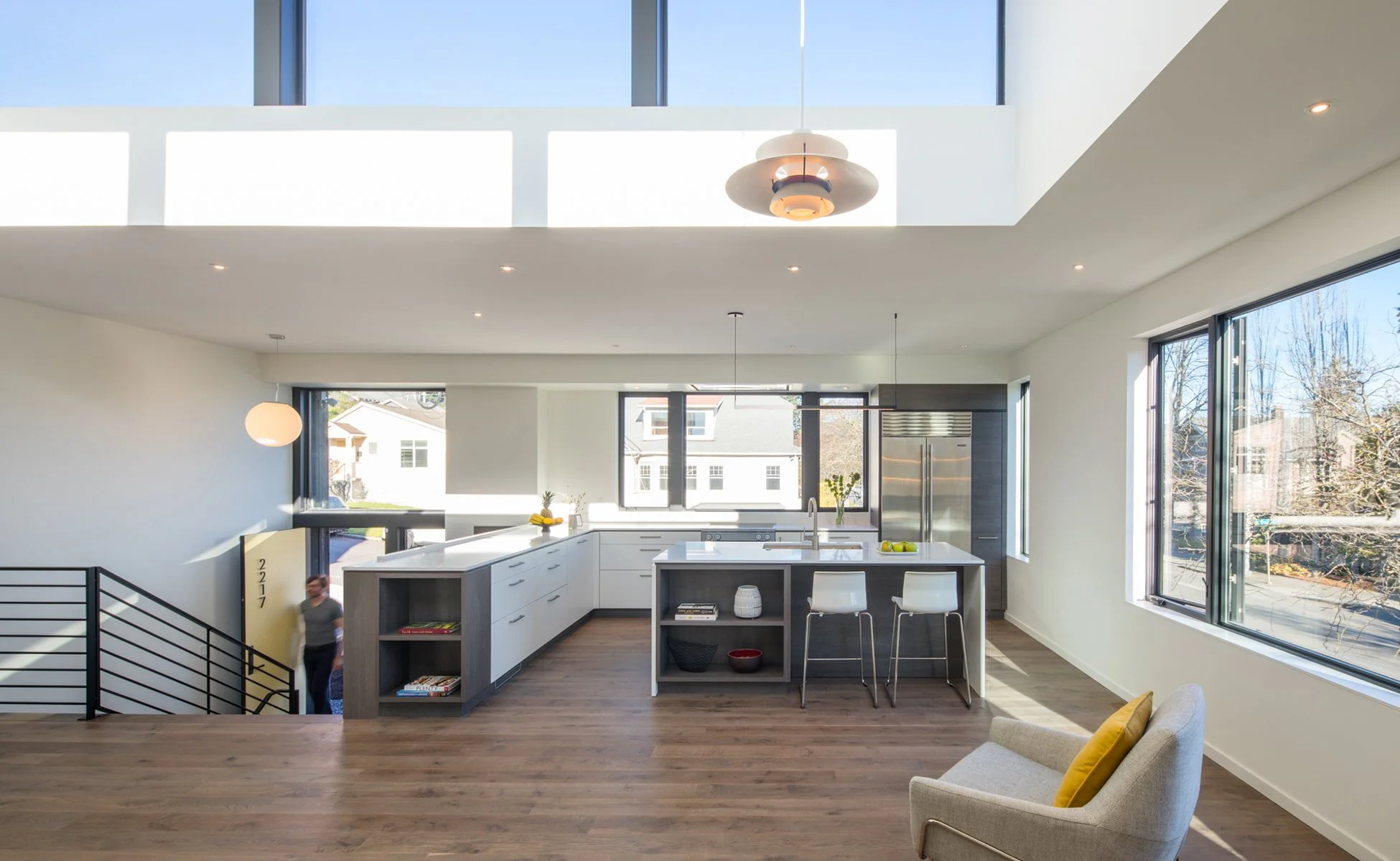
The L-shaped kitchen layout design positions cabinetry along two perpendicular walls, creating a natural work zone while leaving remaining floor area open. This configuration has become incredibly popular in Seattle for good reason, it adapts beautifully to various room sizes and lifestyle needs.
Ideal Applications:
L-shaped layouts work in almost any kitchen size and style. They're perfect for open-concept living where you want the kitchen to interact with adjacent spaces. The configuration creates an efficient work triangle while the open area can accommodate an island, dining table, or simply provide circulation space.
This kitchen layout design particularly suits Seattle homes where connecting to outdoor spaces matters. The open end of the L can face patio doors or large windows, maintaining that crucial indoor-outdoor relationship while the cabinetry defines the work zone.
Making It Work:
Each leg of the L should measure at least eight feet to provide adequate counter and storage space, though one leg can be shorter if necessary. The corner where the two legs meet requires careful planning, this is often an ideal location for the sink, taking advantage of corner windows common in many Seattle homes.
Islands pair beautifully with L-shaped layouts. The island can run parallel to one leg of the L, creating a partial U-shape, or sit perpendicular to create zones for different activities. This flexibility makes the L-configuration incredibly adaptable to individual needs.
Consider how the L-shape directs sight lines. You might position the longer leg to frame a view or orient it toward living areas to maintain visual connection with family and guests. In our German kitchen showroom, we demonstrate how these subtle orientation choices dramatically impact how the space feels and functions.
Galley Precision: Linear Efficiency

The galley kitchen layout design features two parallel runs of cabinetry with a corridor between. Originally developed for ship kitchens where space efficiency was paramount, this layout translates surprisingly well to urban homes and apartments.
Ideal Applications:
Galley layouts excel in narrow spaces where other configurations won't fit. They're common in Seattle's urban apartments, condos, and historic homes where original footprints create long, narrow kitchen spaces. This kitchen layout design also works well as butler's pantries or secondary prep kitchens in larger homes.
For single cooks who prioritize efficiency, the galley layout is hard to beat. Everything sits within easy reach, and the linear workflow facilitates logical movement from refrigerator to prep to cooking to plating.
Making It Work:
The corridor width is crucial, four to five feet provides optimal functionality. Narrower feels cramped; wider creates excessive walking between zones. If the galley serves as a passageway to other rooms, widen to six feet to accommodate through-traffic without disrupting the cook.
Position tall elements, pantries and refrigeration, at the corridor ends rather than mid-run. This maintains clear sight lines through the space and prevents the narrow room from feeling claustrophobic.
Galley kitchens benefit enormously from thoughtful lighting. Under-cabinet fixtures illuminate work surfaces, while recessed ceiling lights provide ambient illumination. In Seattle's often-gray weather, ensuring adequate artificial lighting in galley kitchens becomes especially important.
Consider using lighter colors and reflective surfaces to prevent the galley from feeling too enclosed. However, if your galley kitchen has windows at one or both ends, common in Seattle's classic homes, you might embrace darker, moodier tones that create a cozy, intimate atmosphere.
Bringing It All Together: Choosing Your Ideal Kitchen Layout Design
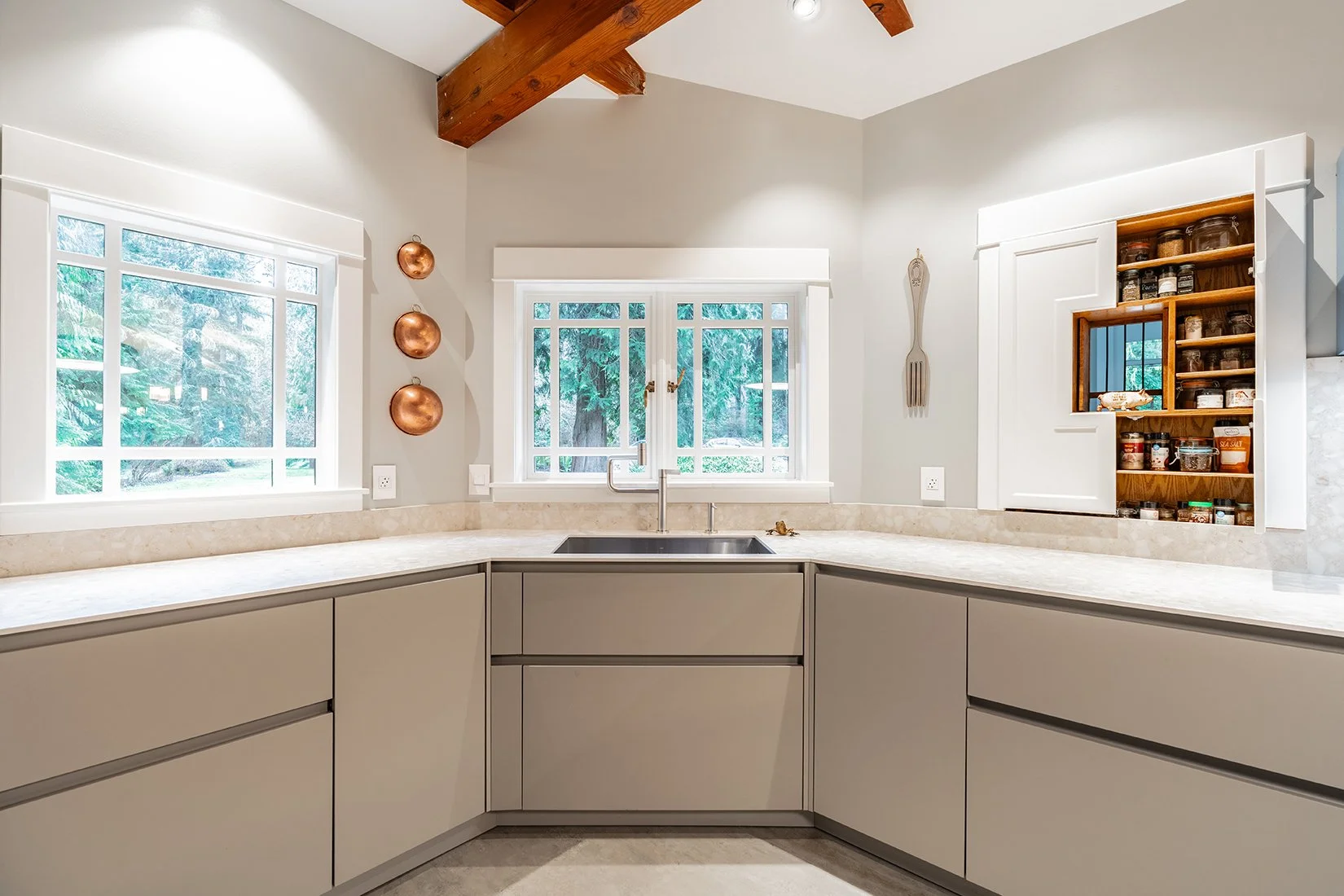
The right kitchen layout design for your Seattle home depends on multiple factors: available space, architectural style, household size, cooking habits, entertaining frequency, and personal preferences. There's no universally superior configuration, only the layout that serves your specific needs.
Consider your daily rhythms. Do you cook elaborate meals from scratch? Quick weeknight dinners? Do multiple people work in the kitchen simultaneously? How do you entertain, formal dinners or casual gatherings? Your answers reveal which kitchen layout design will serve you best.
Think about your home's architecture and character. A Queen Anne Victorian might call for a U-shaped layout that respects the home's compartmentalized rooms, while a modern townhome might embrace an L-shape with an island that creates open flow. The best kitchen layout design works with your home's bones rather than fighting against them.
Seattle's connection to nature should inform your decision. Which layout allows you to maximize views of your garden, the water, or the mountains? How can you position the kitchen to capture morning light or connect to outdoor dining areas? These considerations elevate good kitchen layout design to great.
Experience Kitchen Layout Design Possibilities
The best way to understand how different configurations work is experiencing them in person. At LEICHT Seattle, we've created displays that let you walk through various kitchen layout designs, testing how they feel and function. You can open drawers, evaluate sight lines, and imagine how each configuration might work in your home.
Our team brings extensive experience helping Seattle homeowners navigate these crucial decisions. We understand local architecture, lifestyle patterns, and design preferences. Whether you're renovating a Capitol Hill condo or building a new home on Mercer Island, we'll help you select the kitchen layout design that truly serves your life.
Visit our showroom to explore how precision German engineering and thoughtful layout design combine to create kitchens that are both beautiful and remarkably functional. The right kitchen layout design transforms daily routines into genuine pleasure, and that's what exceptional kitchen design should deliver.